by aubree davis | Mar 31, 2020 | Devotions
Mark 10:25 It is easier for a camel to go through the eye of a needle than for a rich man to enter the kingdom of God.
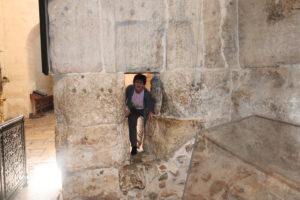
The imagery of this verse was made real to me in our recent trip to Israel. The “eye of a needle” was a small opening at a city gate and measured approximately 3 feet high and 18 inches wide. Entering through the eye was a tight squeeze for an adult and an impossibility for a large animal like a camel.
This teaching moment is brought to you by a rich young man who asked Jesus what was necessary for him to receive eternal life (Mark 10:17). Jesus told him to honor the moral principles of the Mosaic Law through his actions and attitudes. Then in a serious test of the young man’s values, the Lord instructed him to “sell what you have and give to the poor, and you will have treasure in heaven; and come, follow me” (V.21). Verse 22 states the young man “went away sorrowful, for he had great possession.”
It is worth noting that Jesus didn’t challenge the man’s commitment to God. Look at verses 19-20 and you will see he had check all the right boxes in regards to spiritual disciplines. Don’t commit adultery – check. Don’t murder – check. Don’t steal – check. Don’t bear false witness – check. Don’t defraud – check. Honor your father and mother – check. The man was deeply religious.
It is also worth noting that Jesus did not condemn the man for his wealth. Wealth is not sinful, for it can be used to spread the gospel and provide assistance for people in need. The problem wasn’t the man’s wealth, but the value he placed on it. Jesus wanted to see what price the man was willing to pay for the privilege of being a disciple, and in the process challenged him to place greater value on service than possessions. Read again the accounts of Jesus recruiting His disciples and take note that He asked each of them to walk away from something before they walked with Him in service. Peter, James and John left a lucrative fishing business. Matthew walked away from a successful career as a tax collector. Jesus left the throne room of heaven to pick up a towel and basin to wash feet. Somewhere I heard it said, the value of a man is not measured in what he accumulates, but gives away.
Dr. Adam Clarke was an esteemed scholar, theologian and preacher of the 19th century. On his tomb in London is carved the figure of a candle that had been reduced by use. Beneath the candle are the words, “In giving light to others, I myself have been consumed.”
Let’s sing: “To be used of God to sing, to preach, to pray. To be used of God, to show someone the way…”
by aubree davis | Mar 30, 2020 | Devotions
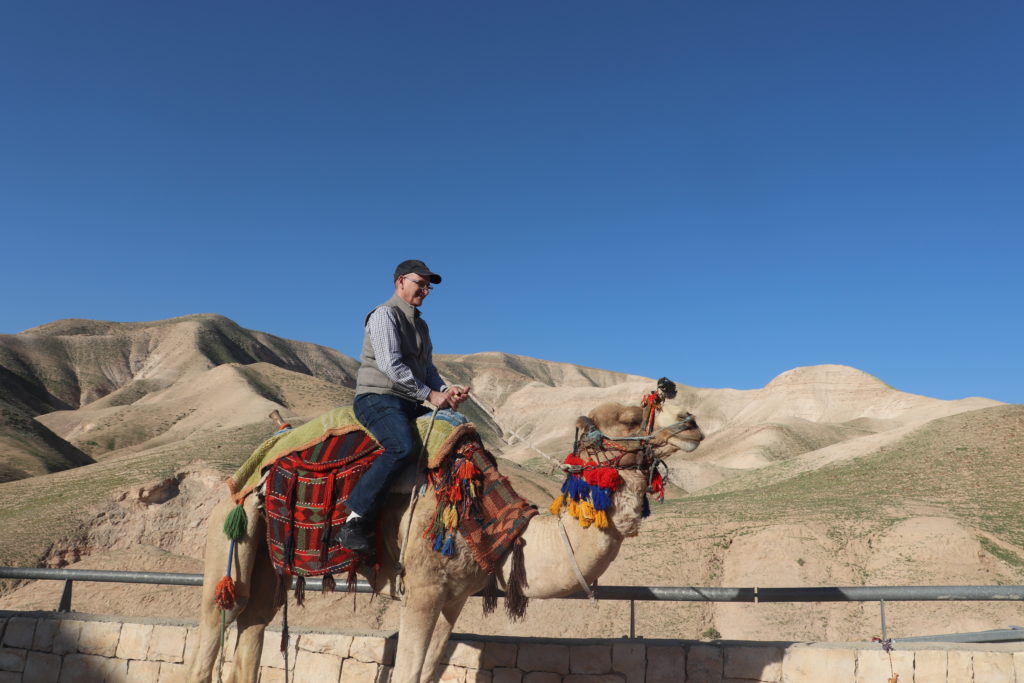 On our second full day in Israel we travelled south from Jerusalem to Masada. Along the way we met a Bedouin young man named Achmed and rode his camel named Sushi. Yes, I have pictures. Over the years I have ridden a donkey (thank you Paul Scholtz), a cow (don’t ask), a hog (two wheel version) a horse, a high-horse, and now – a camel.
A short drive later we arrived at Masada, an ancient fortress situated on top of a large plateau a couple of miles west of the Dead Sea. Its cliffs rise 1,300 feet on the east and 300 feet on the west, making it an ideal refuge from danger. Herod the Great built two palaces there which he used as winter retreats. The fortress contained barracks for an army and cisterns to collect rain water. They grew pigeons for their meat and had a system in place where they could have grain for their food. It was developed to be a self-contained home effectively shut off from the rest of the world.
Historian Josephus wrote that when the Roman troops invaded Jerusalem around A.D. 70, hundreds of Jewish people fled to Masada. As we stood atop Masada, I could see why the Jewish people thought they were safe from threat. From that vantage point you could see the Dead Sea to the east, the plains and hills for many miles giving you early warning of danger. The Roman army continued its march south and encircled the plateau. The Romans were relentless and spent months building a 400 foot ramp from the desert floor to the western wall of the fortress. When the Romans breached the wall they discovered that 960 men, women and children had committed suicide so as to avoid being captured. Only two women and five children were found alive.
Pardon the over-simplification of my thoughts this morning, but I see a parallel with the story of Masada and what is happening in our world today. Just a few weeks ago our economy was soaring, and we had little worries. Now millions of people are out of work, hundreds of thousands have reportedly been infected and thousands have died. Last Friday morning I preached the funeral of a 50 year old man who had been the epitome of health and success, but was struck down by this insidious virus. I stood at Stewart’s grave with the reminder of how precious life is and how quickly it can change.
I do not advocate we live in fear, but urge all to exercise wisdom and cooperate with the mandates given by civic and medical leaders. I believe we can be proactive in this season of isolating ourselves from the threat. Begin each day giving thanks to the Lord for His rich blessings, and spend time in the scripture, in worship and prayer. Be purposeful in looking out for your neighbors, which fits in with the Lord’s teaching to “love your neighbor as yourself” (Matthew 22:39). Pray scriptures like Psalm 91 over your property and family, then place your trust in Almighty God, knowing that He is with us in every season of life (see Matthew 28:20), and He promised to never leave us nor forsake us (Hebrews 13:5).
Let’s sing: “The name of the Lord is a strong tower, the righteous run into it and they are safe…”
by aubree davis | Mar 26, 2020 | Devotions
 My women’s ministries friends, aka the “WMs” – who’ve attended hundreds of Bible studies and served even more community meals– will love learning about Qumran! We were privileged to visit this archeological discovery on our second tour day in Israel.
Located near the Dead Sea, Qumran’s fame comes from a break-away sect, known as the Essenes, who lived and studied there. In the surrounding caves, they left a magnificent legacy that we now call the Dead Sea Scrolls.
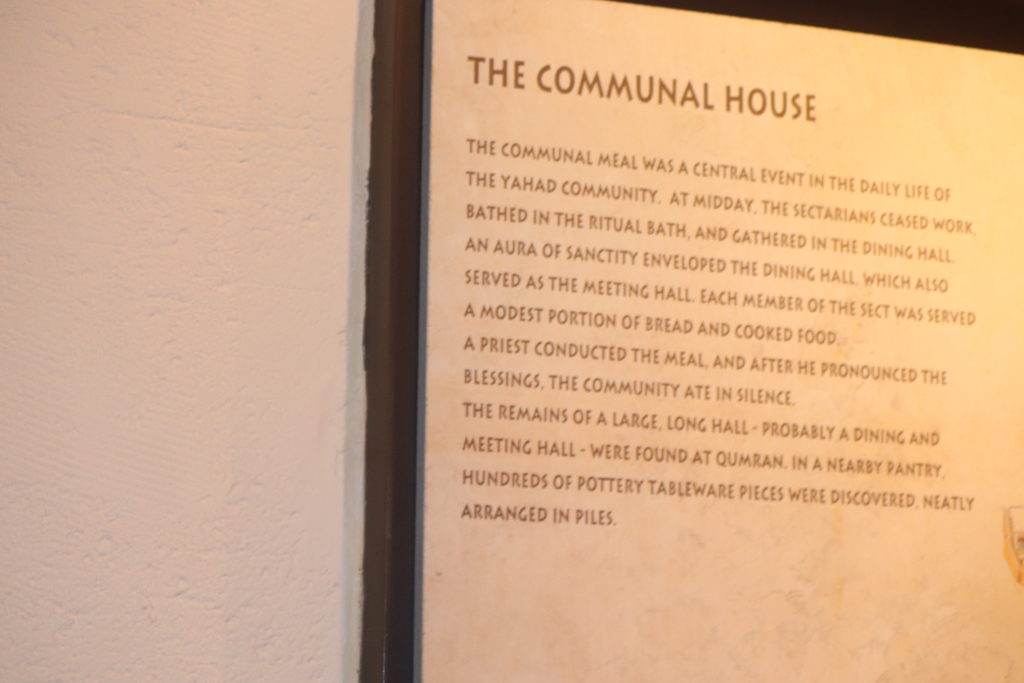
From the Qumran National Park publication: “The Essenes paid great attention to ritual bathing and purity. They lived a communal life in a settlement that was constructed to make them as self-reliant as possible. They had assembly halls, a central dining room in which ceremonial meals were eaten, a kitchen, ritual baths, a laundry room, a watch tower, a stable and a pottery workshop. Of special interest is the Scriptorium – the writing room – with its desks and ink stands, where the Essene scribes probably wrote most of the scrolls found in the adjoining caves.”
I loved learning that archeologists unearthed a dining and meeting hall and, in a nearby pantry, hundreds of pottery tableware pieces “neatly arranged in piles”. Give it up for a well-organized church kitchen that survived centuries and an earthquake!
Seriously, not too far removed in time or distance (by today’s standards) the early Christians were gathering around “the good book” and the table. “Day after day they met together in the temple. They broke bread together in different homes and shared their food happily and freely.” (Acts 2:46, CEV)
I wonder about the first follower of Christ who purposely came to the table “unwashed”. Who was the brave one who did not lather his hands, just so he could set up a dialogue that he’d first overheard from the lips of Jesus?
When Jesus finished speaking, a Pharisee invited him home for a meal. Jesus went and sat down to eat. The Pharisee was surprised that he did not wash his hands before eating. So, the Lord said to him: You Pharisees clean the outside of cups and dishes, but on the inside, you are greedy and evil. (Luke 11:38-39)
Currently, in the middle of the coronavirus pandemic, we’re constantly reminded, “Wash your hands!” That’s not only beneficial but necessary! Of even greater importance, though, is the need to cleanse our hearts. Scripture tells us:
Come near to God and he will come near to you. Wash your hands,
you sinners, and purify your hearts, you double–minded. (James 4:8)
Who may ascend the mountain of the Lord? Who may stand in his holy place? The one who has clean hands and a pure heart, who does not trust in an idol or swear by a false god. (Psalm 24:3-4)
So, let’s continue washing our hands and, at the same time, let’s allow the Holy Spirit to scrub our hearts and minds with the “soap” of God’s Word! (See Ephesians 5:26)
Stay safe, keep clean and be healthy!
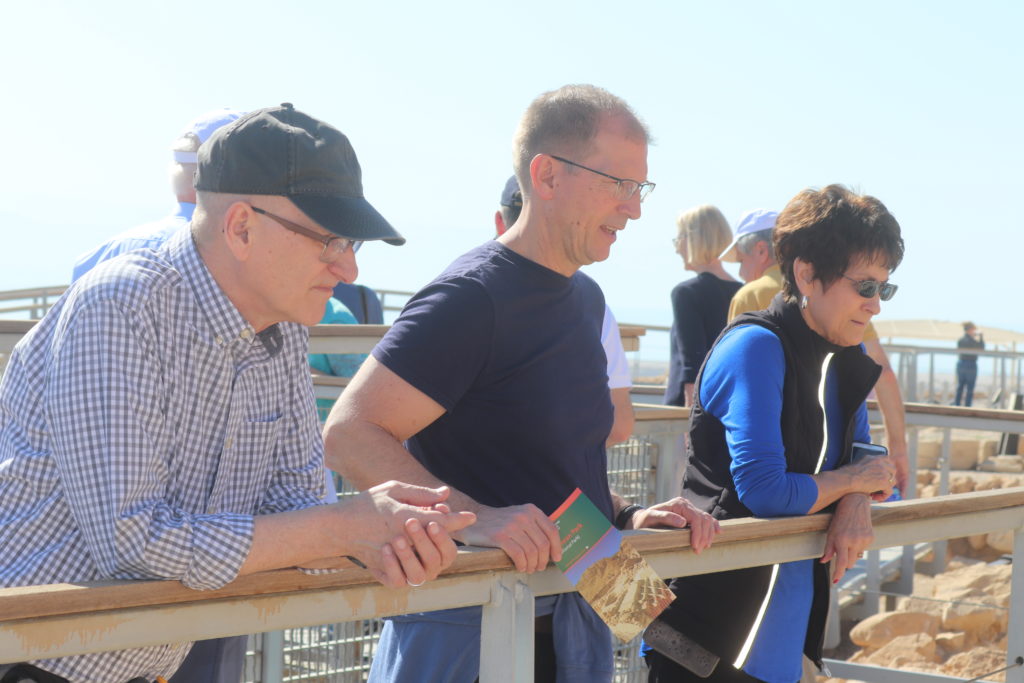
Jim, Scott and Jeanie looking into one of the many ritual baths uncovered at Qumran
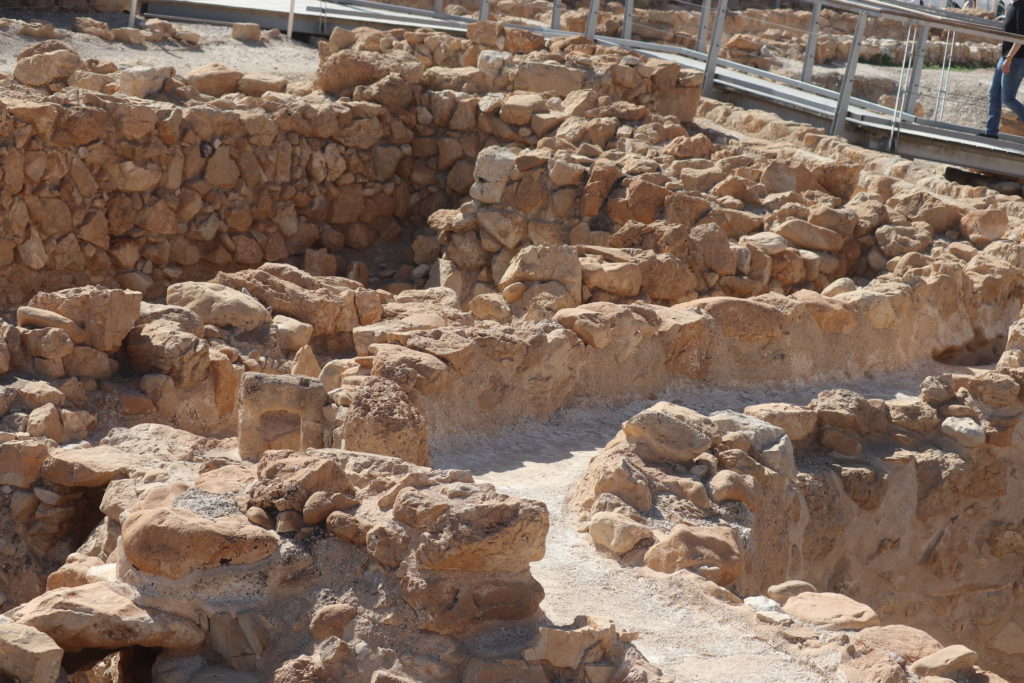
Ritual bath
by aubree davis | Mar 25, 2020 | Devotions
In our recent trip to Israel, we spent our first full day in Jerusalem. One of the highlights of the day and trip was spending time in the upper room. We stood in the room for several minutes and I thought of all that had happened in that room so many years ago.
The days leading to His arrest, Jesus spent time in Jerusalem and the surrounding area. According to Matthew 26, in the hours leading up to his prayer in Gethsemane and arrest, Jesus spent the afternoon and evening privately with his disciples. It was at that time he shared what we refer to as The Lord’s Supper with his disciples, washed their feet and released Judas to carry out his plan of betrayal. It is believed by many these events took place in this upper room.
After Jesus’ resurrection, He met with His disciples several times. John 20 records one of those meetings. The scene was in a home in Jerusalem, and was likely once again the upper room. The purpose of that particular meeting was for Jesus to visit with Thomas and help him deal with his confusion and struggles related to the Lord’s death. Read John 20 again and take note of the gentle way Jesus interacted with Thomas.
A little over a month later, moments before Jesus ascended to heaven He instructed his followers to return to Jerusalem and “wait for the Promise of the Father” (Acts 1:4). Verse 13 states they returned to the upper room where they had been staying. Shortly thereafter, on the Day of Pentecost, 120 followers of Christ gathered in that large room and “all were filled with the Holy Spirit and began to speak with other tongues as the Spirit gave them utterance” (Acts 2:4).
As we stood in the upper room, I imagined all he weighty experiences that took place in that room 2,000 years ago. The Supper, washing feet, Thomas being restored from a state of confusion and discouragement, and then the outpouring of the Holy Spirit. Oh, if only those walls could talk!
Let us also consider the significant experiences in our personal life journey. During this time of quarantine, you can share communion in your home, either alone or with your family. We are restricted from meeting together, but we are not alone. We can use the phone and internet to connect with others and chat about our own experience with the Lord. We, like those 2,000 years ago, can turn a room in a home into an altar and experience the great outpouring of the Holy Spirit.
Let’s sing: “They were in an upper chamber, they were all in one accord when the Holy Ghost descended as was promised by our Lord…”
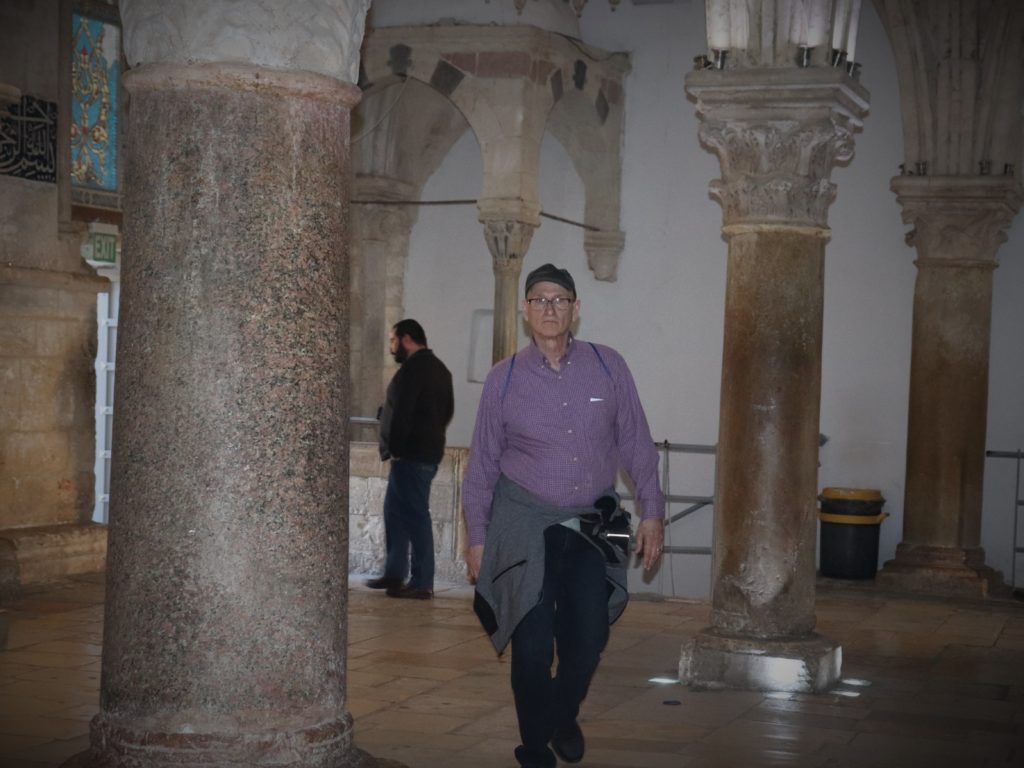
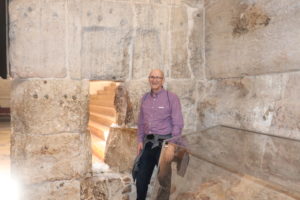
The Upper Room is in the southern part of the Old City of Jerusalem on Mount Zion and is perhaps best known as the traditional site of the Last Supper. The current structure of the room dates approximately from the fourteenth century, which accounts for the existing Gothic-era columns.
by aubree davis | Mar 25, 2020 | Devotions
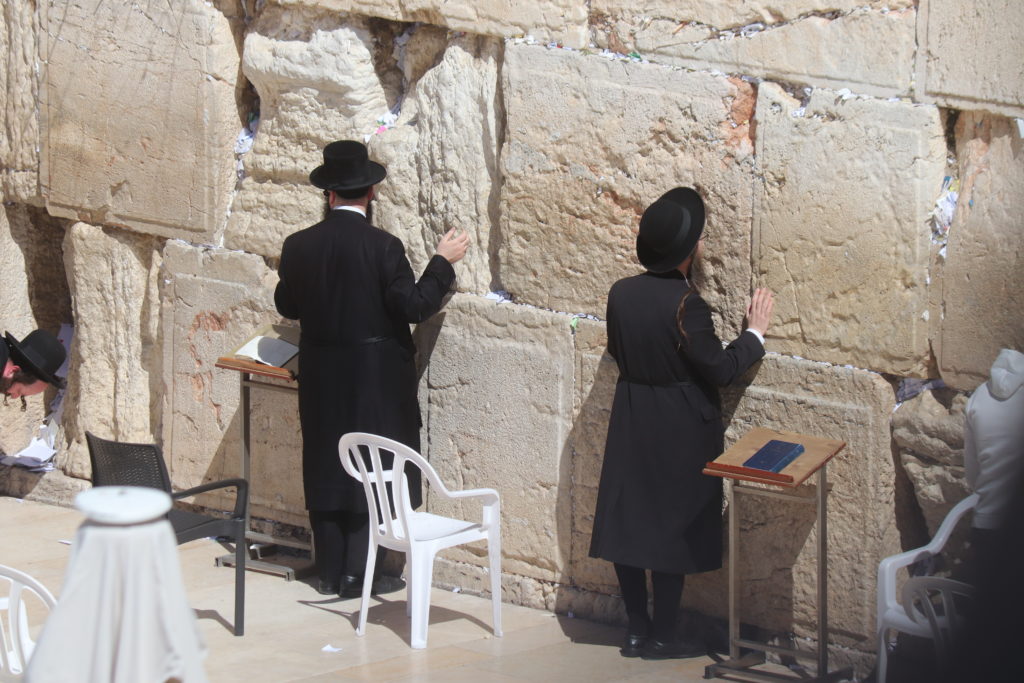
During this time we are “social distancing,” Jim and I are sharing some of our experiences in Israel earlier this month. As we planned our trip, I imagined being at the iconic Western Wall. This happened on our very first touring day, and the experience left me thinking a lot about the great privilege to be able to communicate with our living Lord.
Observant Jews enter the Western Wall plaza (which they consider the holiest site in Jerusalem, because of its proximity to the ancient Holy of Holies) and they carefully practice the protocol they have been taught for pleasing God in this place. The Western Wall has also been called the “Wailing Wall”, referring to the practice of Jews weeping at the site over the destruction of the Temples.
As I watched people gather to wash their hands before entering the plaza, I thought about the role of repentance in effective praying. I know that a clean conscience will help me have confidence as I present my needs to the Lord. Dear friends, if our hearts do not condemn us, we have confidence before God and receive from him anything we ask, because we obey his commands and do what pleases him. (1 John 3:21-22)
I observed women (by the way, there is a separation of men and women at the wall) reading from prayer books, and I saw what seemed to be thousands of written prayers inserted into the crevices of the wall. I know there is some mysticism associated with this practice, but I took a moment to write out the prayer that is always on my mind and not far from my lips these days – physical healing for my brother. I wedged my petition into the wall as a tangible response to the invitation, “Cast all your care on Him, for He cares for you.” (1 Peter 5:7) Then I joined hands with my cousins Jeanie and Laura, and we prayed for my brother.
And we prayed for Israel. May ritual give way to relationship!